Evening Primrose
Oenothera biennis
A biennial plant with a rosette of leaves in the first year and a tall stem with yellow flowers in the second year. The flowers open in the evening and have a lemon-like scent.
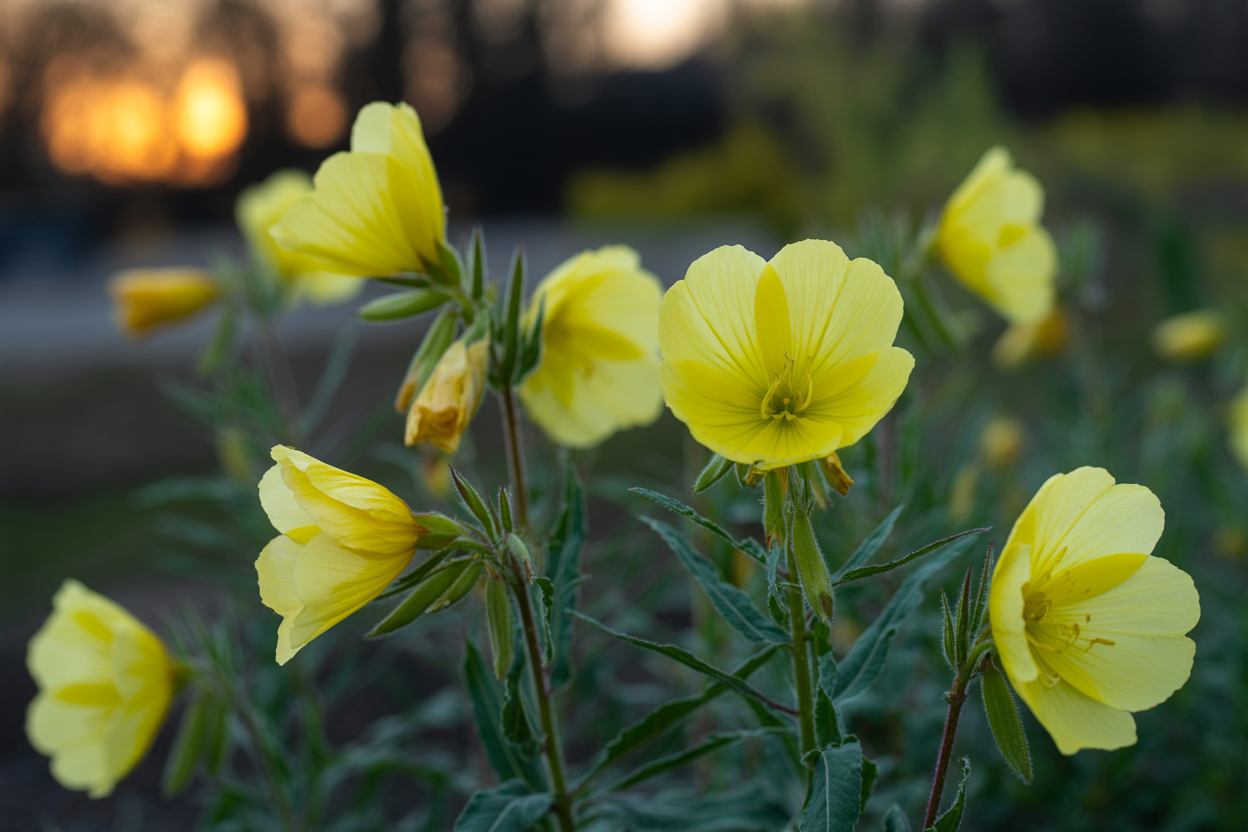
How to Grow Evening Primrose
Growing Conditions
- USDA Zones:
- 4-9
- Soil Type:
- Well-drained soils, tolerates poor, dry, or sandy soils
- Soil pH:
- Prefers mildly acid, neutral, and mildly alkaline pH
- Sunlight:
- Full sun
- Water:
- Drought-resistant once established
Climate & Care
Adaptable to various climates
Planting & Care Tips
Easily grown from seed. Can be invasive, so thin first-year rosettes. Self-sows readily.
Harvest Tips
Harvest first year root in fall. Harvest leaves and flowers in second year. Collect seeds when pods begin to split.
Medicinal Properties & Uses
Active Compounds
Gamma-linolenic acid (GLA), linoleic acid, phenolic acids, and flavonoids.
Medicinal Properties
Anti-inflammatory, astringent, and sedative.
Traditional Uses
Used by Native Americans for food and medicine. Tea used as dietary aid and stimulant. Poultice for bruises and wounds.
Health Benefits
Seed oil used for skin conditions like eczema, PMS, and breast pain. Used for digestive problems and respiratory issues.
How to Use in Remedies
Oil: Extracted from seeds, taken in capsules. Tea: From leaves and flowers for digestive issues. Poultice: Applied to bruises.
Important Precautions
Generally safe. May cause headaches or upset stomach. Not recommended for individuals prone to seizures. Caution with anticoagulants.
Ready to Grow Your Own Evening Primrose?
Get Evening Primrose and 9 other powerful medicinal herbs in the complete Medicinal Seed Kit.
Get the Medicinal Seed Kit