Yarrow
Achillea millefolium
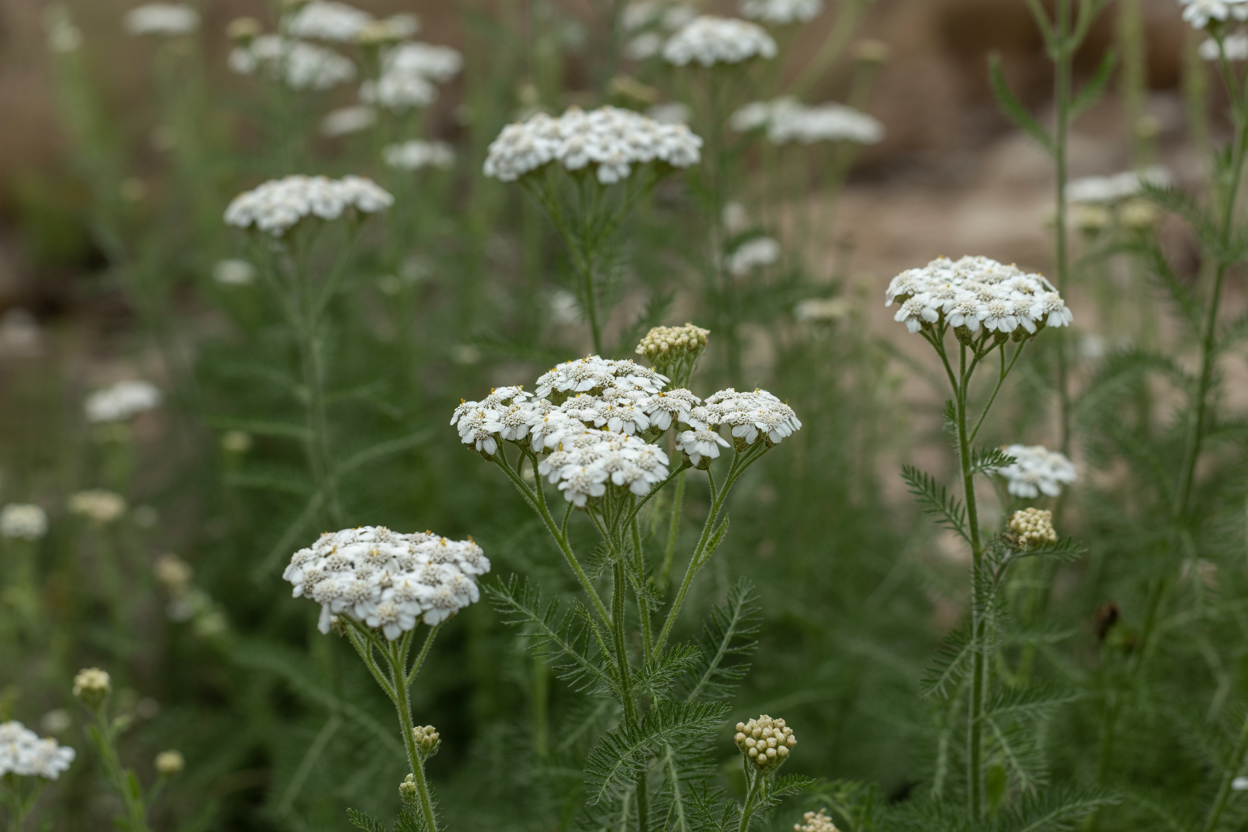
A perennial flowering plant with fern-like, feathery leaves and flat-topped clusters of small white or pink flowers. It has a distinct spicy scent.
How to Grow Yarrow
Growing Conditions
- USDA Zones:
- 3-9
- Soil Type:
- Well-drained soil
- Soil pH:
- Tolerates a wide range of pH levels
- Sunlight:
- Full sun
- Water:
- Drought-tolerant once established
Climate & Care
Hardy and thrives in a wide range of climates
Planting & Care Tips
Can spread aggressively through rhizomes and self-seeding. Plant in an area where its spread is acceptable or contain it. Deer-resistant.
Harvest Tips
Harvest leaves in spring. Harvest flowers from July to September, just as they are opening. Dry in a cool, dry place.
Medicinal Properties & Uses
Active Compounds
Volatile oils (azulene, thujone, camphor), flavonoids (luteolin, apigenin), alkaloids (achilleine), tannins, and salicylic acid.
Medicinal Properties
Hemostatic, anti-inflammatory, antiseptic, digestive, diaphoretic, emmenagogue, and nervine.
Traditional Uses
Used by ancient Greeks and Romans to treat wounds. Native Americans used it for fever, headache, and digestive problems.
Health Benefits
Promotes wound healing, reduces inflammation, supports digestion, helps reduce fever, relieves cold and flu symptoms, and supports women's health.
How to Use in Remedies
Tea: Infuse 1-2 teaspoons dried yarrow for colds, flu, and fever. Tincture: For digestive support. Poultice: Apply to wounds to stop bleeding.
Important Precautions
Can cause allergic reactions in individuals sensitive to the Asteraceae family. Avoid during pregnancy and breastfeeding. Contains thujone which can be toxic in large doses.
Ready to Grow Your Own Yarrow?
Get Yarrow and 9 other powerful medicinal herbs in the complete Medicinal Seed Kit.
Get the Medicinal Seed Kit