Calendula
Calendula officinalis
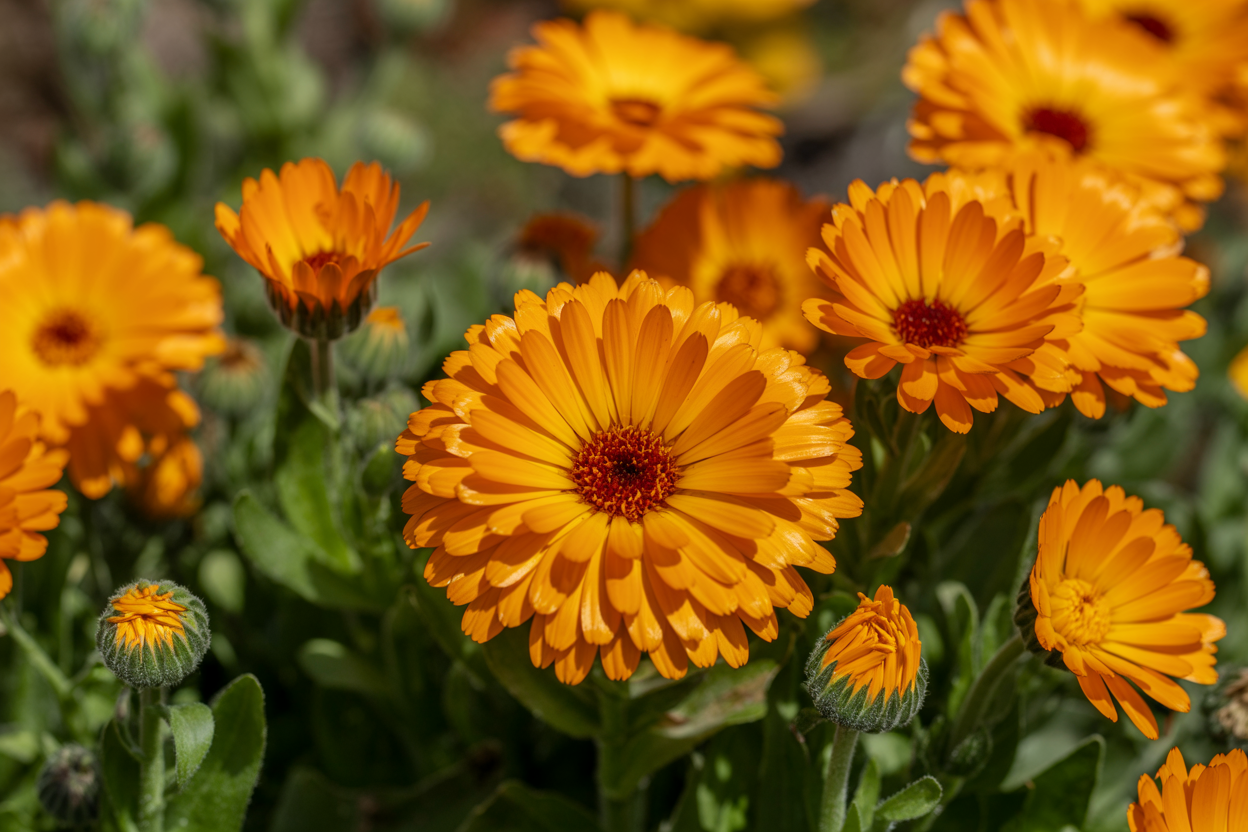
An annual herb with bright orange or yellow daisy-like flowers. The leaves are simple, alternate, and wavy-edged.
How to Grow Calendula
Growing Conditions
- USDA Zones:
- 2-11 (grown as an annual)
- Soil Type:
- Almost any well-drained soil
- Soil pH:
- Tolerates a wide range of pH levels
- Sunlight:
- Full sun
- Water:
- Moderate watering, drought-resistant
Climate & Care
Adaptable to various climates
Planting & Care Tips
Easy to grow from seed. Sow directly in the ground in spring. Pinching vegetative buds promotes bushier plants.
Harvest Tips
Pick flowers every two to three days to encourage continuous blooming. Dry whole flower heads in a well-ventilated area.
Medicinal Properties & Uses
Active Compounds
Flavonol glycosides, triterpene oligoglycosides, saponins, and carotenoids.
Medicinal Properties
Anti-inflammatory, vulnerary, antibacterial, antifungal, and lymphagogue.
Traditional Uses
Used for centuries for wound healing, skin conditions, and digestive issues. Also used as a dye for fabrics and foods.
Health Benefits
Promotes wound healing, soothes skin irritations like rashes and burns, helps with digestive issues, and supports the immune system.
How to Use in Remedies
Infused oil: Potent topical remedy for wounds and burns. Salve: Popular remedy for diaper rash and skin irritations. Tea: For digestive and immune support.
Important Precautions
Do not use internally during pregnancy. Can cause allergic reactions in individuals sensitive to the Asteraceae family.
Ready to Grow Your Own Calendula?
Get Calendula and 9 other powerful medicinal herbs in the complete Medicinal Seed Kit.
Get the Medicinal Seed Kit