Chamomile
Matricaria recutita
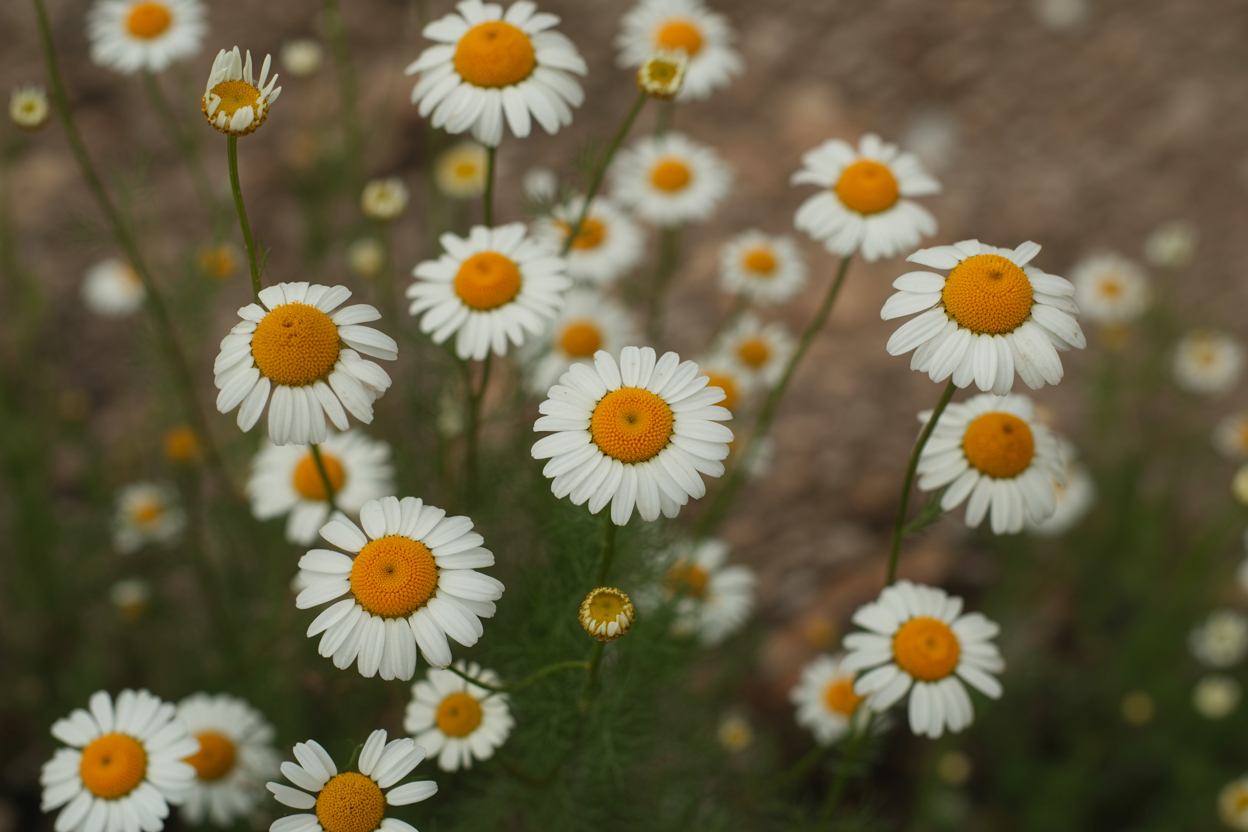
An annual herb with delicate, feathery leaves and small, daisy-like flowers with white petals and a yellow center. The flowers have a characteristic apple-like scent.
How to Grow Chamomile
Growing Conditions
- USDA Zones:
- 2-8
- Soil Type:
- Well-drained, light sandy soils
- Soil pH:
- Tolerates a wide range of pH levels
- Sunlight:
- Full sun
- Water:
- Moderate watering
Climate & Care
Tolerates cold weather
Planting & Care Tips
Easy to grow from seed. Can be sown directly in the garden in spring. Self-seeds readily.
Harvest Tips
Harvest flowers when fully open. Pick blossoms without stems. Dry in a warm, well-ventilated area away from direct sunlight.
Medicinal Properties & Uses
Active Compounds
Apigenin, chamazulene, bisabolol, flavonoids, and coumarins.
Medicinal Properties
Anti-inflammatory, anti-bacterial, anti-allergenic, sedative, and antispasmodic.
Traditional Uses
Used in ancient Egypt, Greece, and Rome for its calming and anti-inflammatory properties. Traditionally used for digestive upsets and anxiety.
Health Benefits
Promotes relaxation and sleep, soothes digestive issues, reduces inflammation, and helps with skin conditions like eczema.
How to Use in Remedies
Tea: Made from dried flowers for anxiety, insomnia, and digestive upsets. Steam inhalation: For cold symptoms. Compress: For tired, irritated eyes.
Important Precautions
Can cause allergic reactions in individuals sensitive to the Asteraceae family. May interact with anticoagulant medications.
Ready to Grow Your Own Chamomile?
Get Chamomile and 9 other powerful medicinal herbs in the complete Medicinal Seed Kit.
Get the Medicinal Seed Kit