Echinacea
Echinacea purpurea
A perennial herb with large, daisy-like purple flowers with a spiny central cone. The leaves are dark green and oval-shaped.
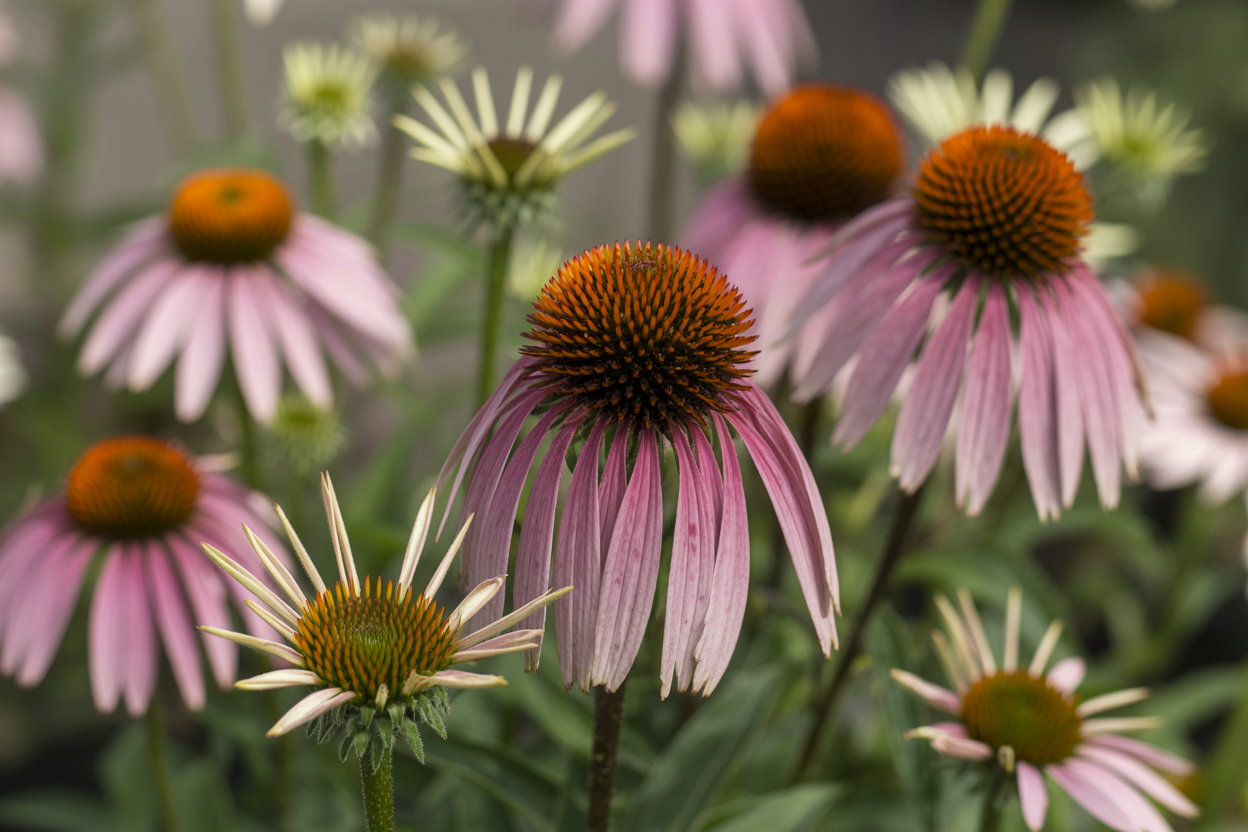
How to Grow Echinacea
Growing Conditions
- USDA Zones:
- 3-9
- Soil Type:
- Light sandy soil
- Soil pH:
- Tolerates a wide range of pH levels
- Sunlight:
- Full sun
- Water:
- Drought-tolerant once established
Climate & Care
Native to eastern and central North America
Planting & Care Tips
Can be grown from seeds or by dividing established plants. Seeds may require cold stratification. Space plants 18-24 inches apart.
Harvest Tips
Harvest flowers and leaves before the flower loses its petals. Harvest roots of 3-year-old plants in the fall.
Medicinal Properties & Uses
Active Compounds
Alkamides, caffeic acid derivatives, polysaccharides, and glycoproteins.
Medicinal Properties
Immunostimulatory, anti-inflammatory, and antimicrobial.
Traditional Uses
Used by Native Americans for infections, pain, and wounds. Popular herbal remedy in America in the early 20th century.
Health Benefits
Believed to stimulate the immune system. Often used to prevent and treat the common cold. May have anti-inflammatory and antioxidant effects.
How to Use in Remedies
Tincture: Root tincture for boosting immune system. Tea: From dried roots, leaves, or flowers. Capsules: Available as dietary supplement.
Important Precautions
Generally safe for short-term use. Can cause allergic reactions in individuals sensitive to the Asteraceae family. Those with autoimmune disorders should consult a doctor.
Ready to Grow Your Own Echinacea?
Get Echinacea and 9 other powerful medicinal herbs in the complete Medicinal Seed Kit.
Get the Medicinal Seed Kit