Feverfew
Tanacetum parthenium
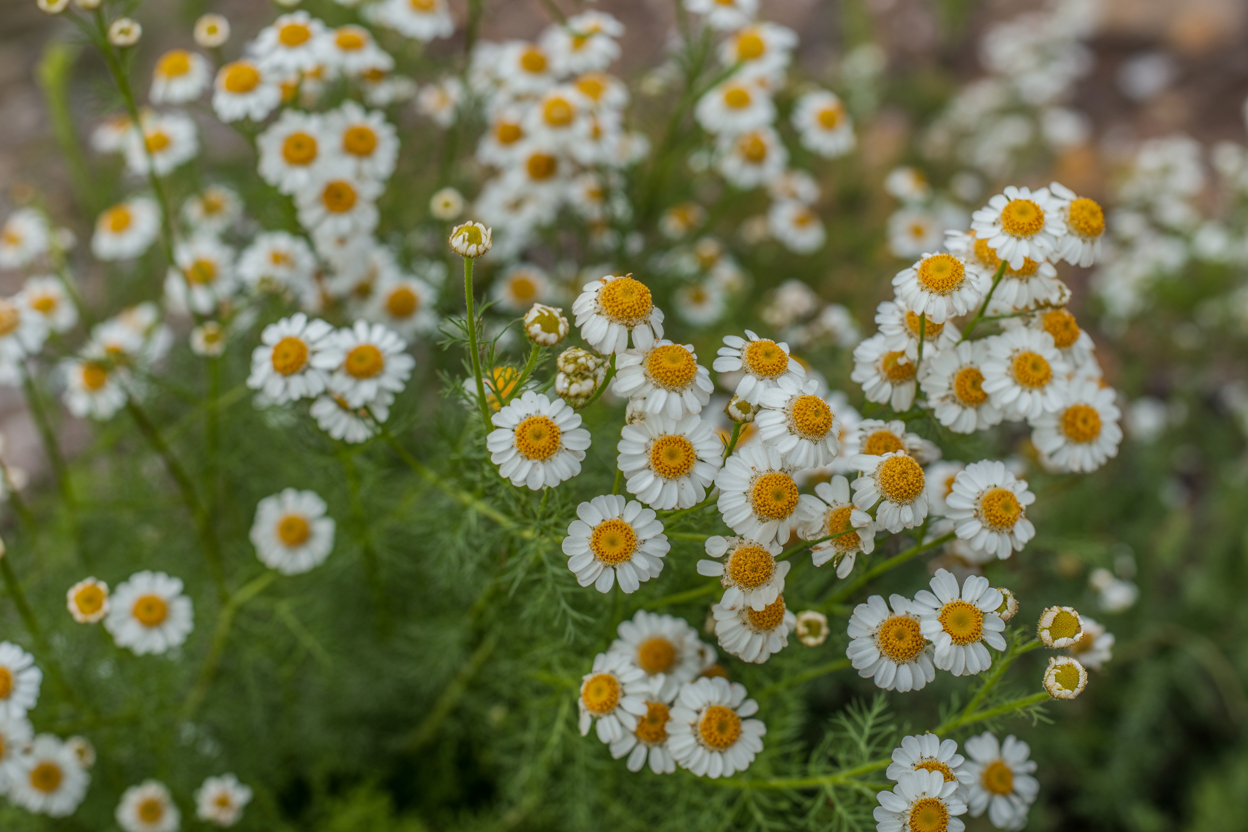
A perennial flowering plant with feathery leaves and small, daisy-like flowers with white petals and a yellow center. The plant has a strong, bitter odor.
How to Grow Feverfew
Growing Conditions
- USDA Zones:
- 5-9
- Soil Type:
- Ordinary garden soil, well-drained
- Soil pH:
- Tolerates mildly acidic, neutral, and mildly alkaline soils
- Sunlight:
- Full sun
- Water:
- Moderate watering
Climate & Care
Hardy and adaptable
Planting & Care Tips
Easy to grow from seed. Self-sows prolifically. Can be divided in spring.
Harvest Tips
Gather leaves and flowering heads as the plant comes into flower. Therapeutic activity can decrease over time after harvesting.
Medicinal Properties & Uses
Active Compounds
Parthenolide (a sesquiterpene lactone), flavonoids, and volatile oils.
Medicinal Properties
Anti-inflammatory, cardiotonic, antispasmodic, and emmenagogue.
Traditional Uses
Traditionally used for fevers, migraine headaches, and pain relief. Known as "medieval aspirin". Also used for menstrual problems.
Health Benefits
May help prevent migraine headaches. Has anti-inflammatory properties beneficial for conditions like rheumatoid arthritis. May help with pain relief.
How to Use in Remedies
Fresh leaves: Chewing 1-4 fresh leaves per day reported effective for migraines. Tea: For arthritis, colds, and fevers. Tincture: For migraine prevention.
Important Precautions
Avoid during pregnancy. Can cause allergic reactions in individuals sensitive to the Asteraceae family. May slow blood clotting and interact with blood thinners.
Ready to Grow Your Own Feverfew?
Get Feverfew and 9 other powerful medicinal herbs in the complete Medicinal Seed Kit.
Get the Medicinal Seed Kit